-
October 7, 2025
-
98 Views
From Data to Decisions: How AI Turns Insights into Action
Businesses drown in data but crave clarity. AI transforms raw insights into actionable steps, spotting patterns and recommending moves that drive real results without the guesswork.
Author
Most businesses are drowning in data but starving for clarity. AI bridges that gap by turning raw numbers into clear next steps your team can act on with confidence.
Why data alone is not enough
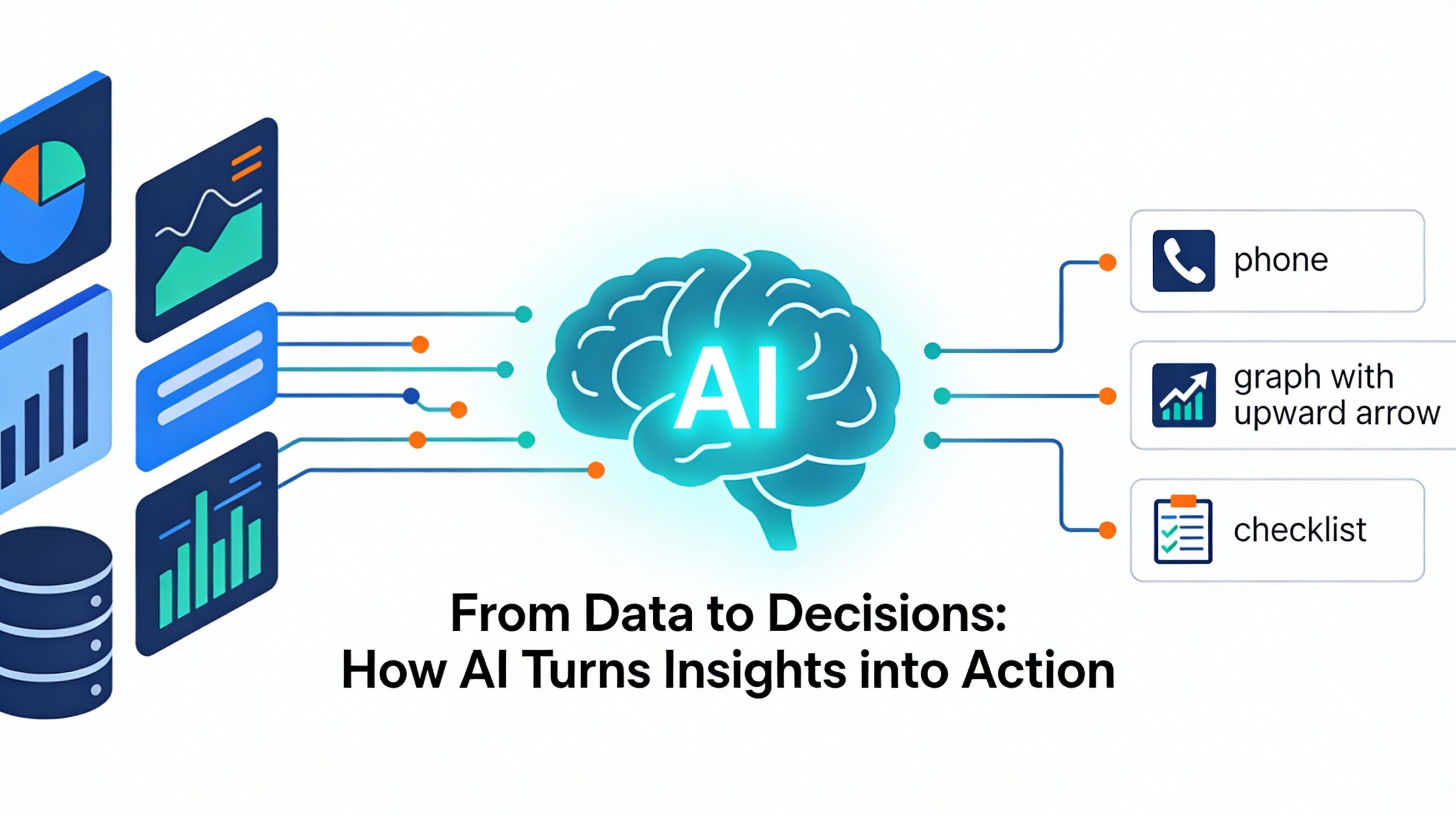
Spreadsheets, dashboards and reports often tell you what happened, but they rarely tell you what to do next. AI changes this by spotting patterns, correlations and trends that humans would miss, especially across large, messy data sets.
Instead of handing you more charts, a well-designed AI system highlights the few metrics that actually matter and explains why they are changing, so decisions become faster and less emotional.
From dashboards to decisions
Modern AI tools go beyond simple reporting and move into recommendation. They can surface which customers are most likely to churn, which marketing channels are driving profitable leads, or which processes are slowing the business down, then suggest specific actions to take.
For a small business, that might look like an AI assistant flagging three clients to call this week, two campaigns to pause, and one service line to promote, all grounded in your live data rather than guesswork.
Turning insights into repeatable actions
The real power of AI appears when recommended actions become repeatable workflows. Once you trust the logic, you can automate parts of it: sending follow‑up emails, routing leads, creating tasks for your team or updating your CRM without manual effort.
Over time, the system learns from results, improving its suggestions and tightening the feedback loop between “What is happening?” and “What should we do about it?” so your operations get sharper every month.
Keeping humans in the loop
AI should not replace human judgement; it should focus it. The best setups use AI to do the heavy lifting of analysis and pattern‑spotting, while people stay in charge of priorities, nuance and relationships.
By combining machine intelligence with human context, small businesses get enterprise‑level decision support without the enterprise‑level headcount or budget.
/BLOG
Other insights
Why waiting to adopt AI is riskier than you think
-
October 16, 2025
-
56 Views
Opportunity mapping in practice
-
October 7, 2025
-
45 Views
Upskilling your team for an AI-first future
-
October 7, 2025
-
52 Views
Leave a comment